What are the Lost Gardens of Heligan?
The Lost Gardens of Heligan are one of Cornwall's best-loved days out: some 200 acres of Victorian pleasure grounds, working kitchen gardens, subtropical jungle and ancient woodland, all lovingly brought back to life after decades of neglect. If you are wondering whether Heligan is worth visiting, the short answer is yes: it appeals to keen gardeners, curious children, wildlife lovers and anyone who simply enjoys a beautiful walk with a story behind it.
Heligan was the seat of the Tremayne family for more than 400 years, and by the late nineteenth century its gardens were at their peak. Then came the First World War. Many of the gardeners who tended the estate went off to fight, and a good number never returned. With the workforce gone, the gardens slowly slipped into a long sleep, swallowed by brambles and ivy for the better part of the twentieth century.
Their rediscovery in the early 1990s is the stuff of Cornish legend. A chance exploration after the Great Storm of 1990 led Tim Smit and a small band of enthusiasts to a walled garden buried under fallen timber and undergrowth. A pencilled motto and a list of names scratched on a wall of the outdoor lavatory, left by gardeners who worked there a century before, inspired one of the most celebrated garden restorations Britain has ever seen. Today the Lost Gardens of Heligan are once again a living, productive estate, worked much as they would have been in Victorian times.
The main areas to explore
Heligan divides neatly into a few distinct areas, each with its own character. Give yourself time to wander between them rather than rushing; part of the pleasure is the way the mood shifts from tidy formality to wild, green jungle within a short walk.
The Northern Gardens and Productive Gardens
The Northern Gardens are the more formal, ornamental heart of the estate: flower gardens, a summerhouse, Italian and Sundial gardens, and sweeping views out over the Cornish countryside. Alongside them sit the Productive Gardens, the restored walled kitchen gardens where Heligan really shines.
- Walled kitchen gardens growing heritage fruit, vegetables and herbs using traditional methods
- Glasshouses and frames, including a beautifully restored pineapple pit heated the old-fashioned way with manure
- Melon and vine houses that show just how ambitious Victorian gardeners were
- Seasonal displays that change through the year, so there is always something new coming into its own
The Jungle
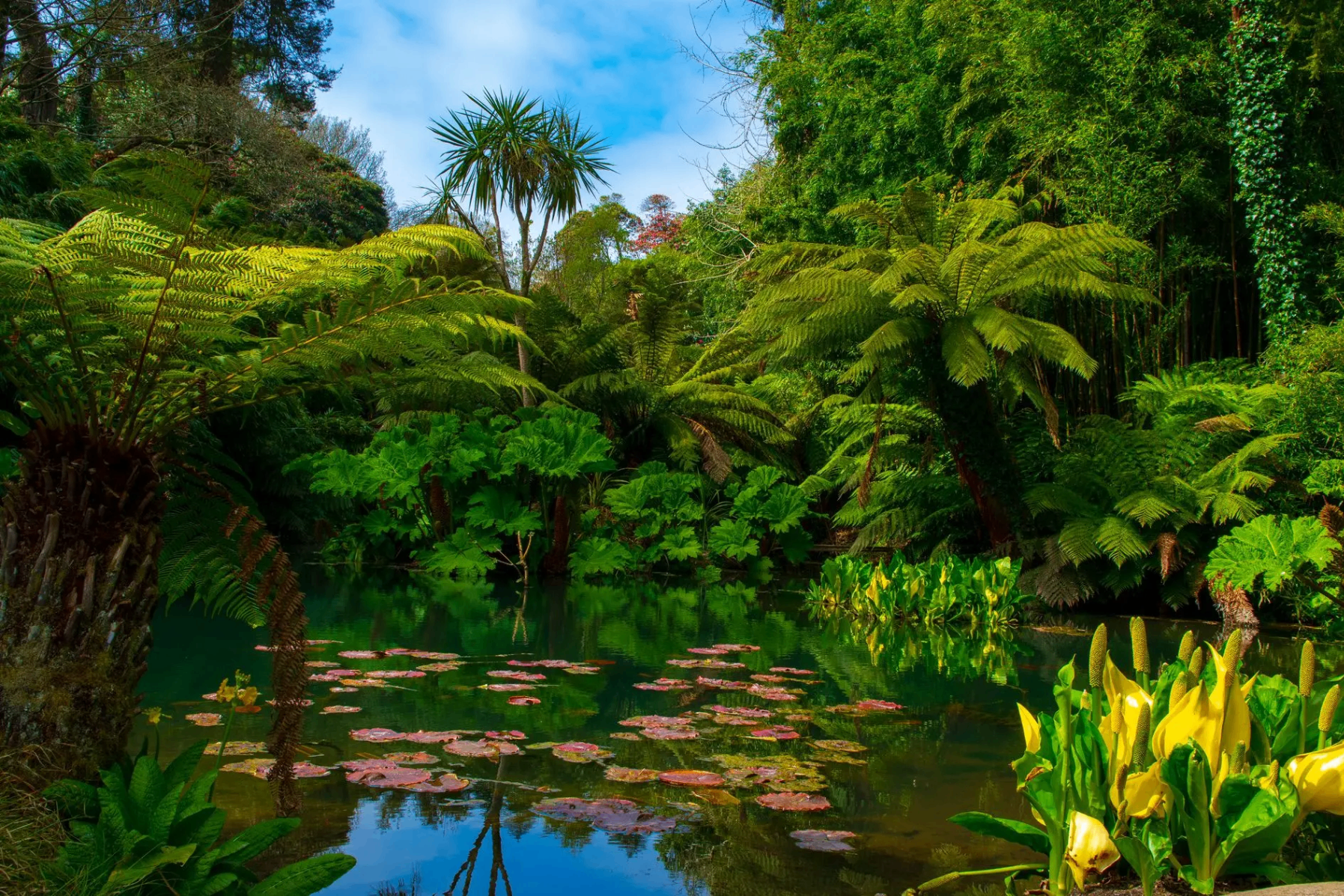
For many visitors the Jungle is the highlight. A sheltered, steep-sided valley with its own warmer microclimate, it is planted with towering tree ferns, bamboo, palms, gunnera and banana plants that make you forget you are in Britain at all. A boardwalk winds down past a series of ponds, and a famous rope bridge lets you cross high among the canopy of tree ferns.
The Lost Valley and wider estate
Beyond the more manicured areas, the Lost Valley offers a quieter, more natural landscape of woodland, water and meadow. It is the perfect place to slow down and let the children run, and it links into a wider network of walks. Wildlife is very much part of the Heligan experience: the estate is home to a working farm, wildlife hides and cameras, and plenty of opportunity to spot birds, insects and other creatures along the way.
The famous living sculptures
No guide to the Lost Gardens of Heligan would be complete without the living sculptures, which have become the gardens' signature image and a favourite with photographers.
- The Mud Maid a serene woman who appears to sleep in the earth, her body formed of soil and clay and clothed in living ivy and other plants that change with the seasons
- The Giant's Head a great turf-covered face emerging from the woodland floor, mossy and mysterious, as though the land itself is dreaming
Both are wonderful to seek out with children, who love the idea that the gardens are quietly alive. Because the sculptures are planted rather than carved, they look subtly different depending on the time of year you visit.
How long to allow
Heligan rewards a leisurely pace. As a rough guide:
- Half a day (2 to 3 hours) is the minimum to take in the walled gardens, the living sculptures and a loop through the Jungle
- A full day is ideal if you want to add the Lost Valley, the wider woodland walks, the farm and wildlife areas, and a proper stop for lunch
- Keen gardeners and photographers can happily lose an entire day here without seeing everything
Because so much of the estate is outdoors and spread over a large site, it never feels crowded even when busy, so there is no need to hurry.
Getting to Heligan from Gorran Haven
One of the joys of staying in Gorran Haven is just how close you are to Heligan. From The Beach House it is only around a 10-minute drive, following the lanes towards Mevagissey and Pentewan and then on to the gardens, which are well signposted from the surrounding roads.
- By car the simplest option, with parking on site; allow around 10 minutes from the house
- Combine it with Mevagissey the pretty harbour village is just up the road, so many visitors pair the two; see our Mevagissey day trip guide for ideas
- Heligan also sits within easy reach of the Eden Project, if you fancy a bigger day out
For more inspiration on filling your week, browse our things to do in Gorran Haven guide.
Practical tips for your visit
A little planning makes for a far more comfortable day. Heligan is a large, working estate on sloping ground, so come prepared.
- Wear proper footwear. The gardens are hilly and the paths, especially in the Jungle and Lost Valley, can be muddy and slippery after rain. Trainers or walking shoes are far better than sandals
- Dress for the outdoors. Bring layers and a waterproof; you will be outside for most of your visit whatever the forecast
- Food and drink. There is a café and kitchen on site serving hot meals, cakes and drinks, much of it grown or reared on the estate, and plenty of spots to sit; you are welcome to bring a picnic too
- Family friendly. Children generally love Heligan, from the living sculptures to the wildlife and space to roam; buggies can manage many but not all of the paths given the terrain
- Dogs. Well-behaved dogs on leads are usually welcome, but policies can change, so please check the current dog policy before you set off
- Accessibility. Some areas are steep or uneven; the official website has up-to-date accessibility information and suggested routes
Rain in the forecast? Heligan is still enjoyable in a shower with the right kit, but for wetter days you might also like our rainy day activities in Cornwall guide.
The best time of year to visit
Because Heligan is first and foremost a garden, it changes dramatically through the seasons, and there is genuinely no bad time to come.
- Spring is spectacular for camellias, magnolias, rhododendrons and carpets of bulbs, and is many regulars' favourite season
- Summer brings the kitchen gardens into full productive glory and the Jungle to its lushest, greenest peak
- Autumn offers rich colour, fruit and fungi, plus a quieter, more atmospheric feel
- Winter reveals the structure of the gardens and early camellias, and can be beautifully peaceful
Whenever you visit, always check current tickets and opening times on the official Heligan website before you travel, as hours and seasonal events vary through the year.
Stay a minute from the beach, minutes from Heligan
The Lost Gardens of Heligan make a perfect centrepiece to a Cornish holiday, and there are few better bases for exploring them than The Beach House in Gorran Haven. Our designer coastal home sleeps eight and sits under a minute's walk from the beach, with Heligan just a 10-minute drive away and the whole of south Cornwall on the doorstep.
Spend your morning among the tree ferns and living sculptures, then be back by the sea in time for a swim before dinner. Check availability and book your stay on Airbnb, or get in touch if you have any questions.